
AI Layoffs Statistics 2026: Why 9% and 31% Both Matter

Jay Vergara 8 min read
- Leadership
- AI tools
- L&D
You’ll hear two AI layoffs statistics that seem to argue with each other. Only 9% of the people Udacity surveyed, most of them managers, say they’d replace their entire workforce with AI if they could. Meanwhile, almost a third of the customer service leaders Gartner surveyed have already cut frontline jobs because of AI, or plan to by early 2027. Both numbers are real. They answer different questions, and the gap between them is the part most coverage of AI layoffs misses.
The video is on YouTube, and this is the written version with one number fixed. In the video I said 37%, a figure I first saw in a Medium post. When I went back to verify it, the stronger primary source was Gartner’s 31%, so that’s the number I use here. The argument is the same.

Two AI layoffs statistics that measure different things
The 9% comes from Udacity’s State of AI at Work report, covered by CIO. Seven in ten of the people in that survey hold management positions, and only 9% said they’d like to replace their entire workforce with AI tools. That’s an extreme question, and most leaders sensibly answer no. So 91% don’t want to replace everyone. That’s the polite answer, and it’s the one that gets quoted in all-hands meetings and reassuring emails.
The 31% answers a much narrower question. Gartner surveyed 321 customer service and support leaders in late 2025, and 31% had already made frontline layoffs in response to AI or were planning them through the first quarter of 2027. That’s specific roles being cut, the ones where an AI agent can now do most of the work, on the down low while the public conversation stays on the big “replace everyone” question.
Put side by side, the two numbers look like this. Keep in mind they come from different surveys asking different people different questions.
Gartner’s own read is more cautious. Most of the leaders it surveyed (63%) are shrinking frontline teams through attrition instead, by not replacing people who leave, and 85% are giving their human agents more responsibility. That attrition number backs up the backfill signal I talk about below.
So the question that matters for you isn’t whether your CEO would replace everyone. They almost certainly wouldn’t. What matters is whether your specific role is on the wrong side of that line.
The wider numbers point the same way. At Block, Jack Dorsey tied the February cuts to AI, saying “intelligence tools” have changed what it takes to build and run a company (CNBC). Tom’s Hardware kept count across the whole tech industry for the first quarter of 2026.
~40%
of Block’s staff cut in February 2026, from more than 10,000 people to just under 6,000
CNBC, February 2026
~80,000
tech layoffs in the first quarter of 2026, almost half of them cut because of AI
And in Harvard Business Review, Thomas Davenport and Laks Srinivasan argue that many of these cuts are made on what companies expect AI to do, before it has proven it can.
Three signals that show your company’s real AI plan
If you want to know where your own company sits in this gap, there are three places to look. None of them depend on what’s in the strategy deck.
What it hires for, and what it doesn’t backfill
Look at what your company is hiring for and what it isn’t. When someone leaves, does the role get backfilled the same way? Does the team get restructured, with the work absorbed into AI-assisted workflows? Or does the team just get smaller while the people left take on bigger tasks? Hiring is where the budget actually gets spent, so it’s the most reliable signal you have.
Which workflows get automated
Watch where the company is investing in AI. Customer support, content generation, data analysis, internal documentation, recruiting screens, and sometimes learning and development. If your company is rolling out AI tools in any of those areas, the legacy role conversation is already happening in the background, even if nobody has said it out loud.
Who stays after a tough decision
Layoffs, reorgs and voluntary departures all show you what a company values. If the people who stay are mostly the ones already using AI to extend their own work, the company has made a decision about AI fluency. That can be true while the official line is still that AI is helping everyone.
What “legacy role” actually means
The phrase “legacy role” hides a lot in this conversation. It sounds like an old job, the kind that should have been retired along with rotary phones. In executive vocabulary right now it means a role whose tasks are now mostly automatable, no matter how recently the role was created.
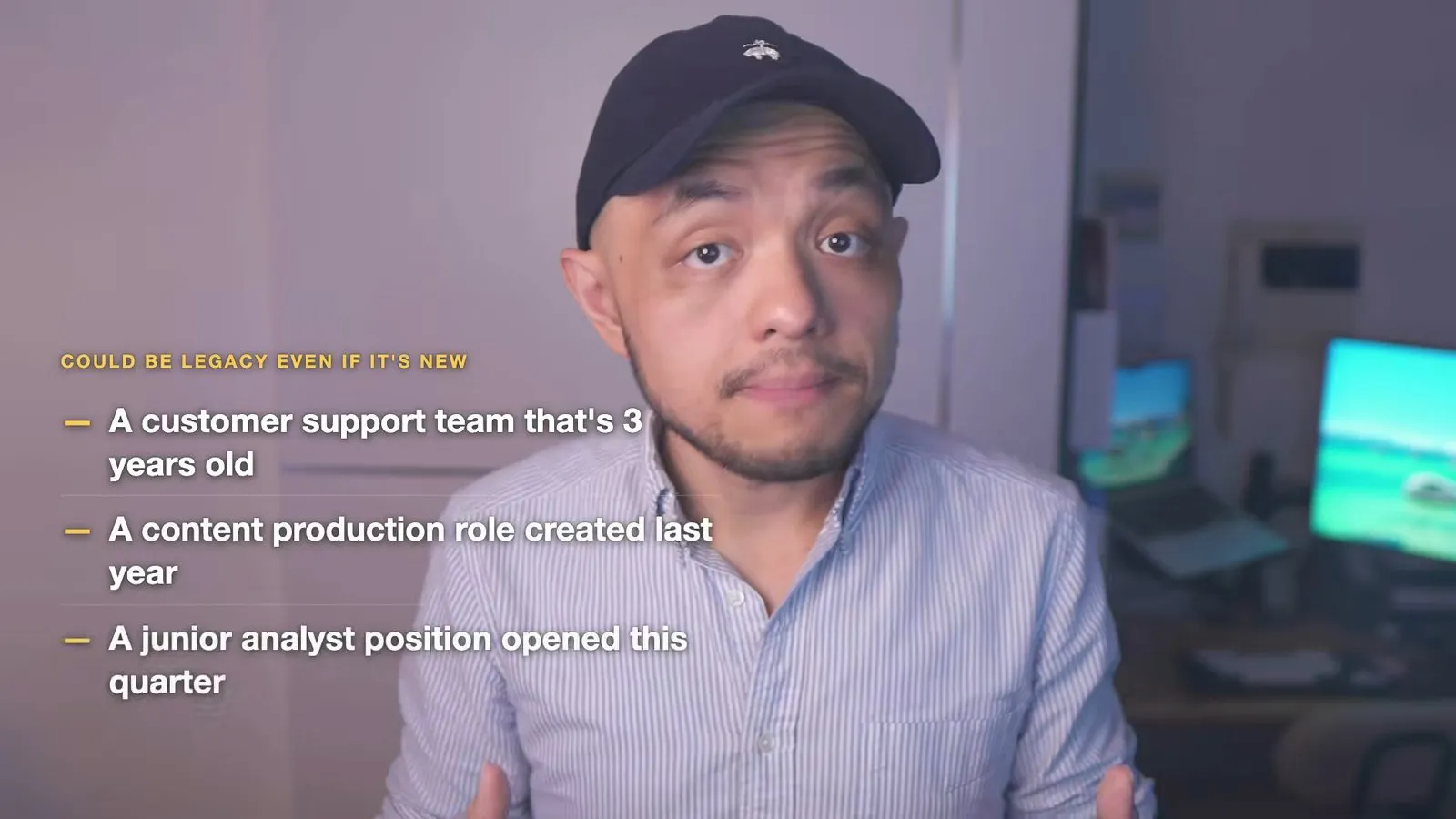
That could be a customer support team that’s three years old, a content production role created last year, or a junior analyst position opened this quarter. If an AI agent can absorb the work, the role counts as legacy, even if it’s brand new. I don’t think most professionals have caught on to that yet.
This doesn’t mean every role on that list disappears. BCG’s April 2026 analysis expects AI to reshape 50% to 55% of US jobs over the next two to three years, while 10% to 15% could be eliminated five or more years out. A reshaped job is still a job you have to get ready for, though.
Will AI replace my job? Ask about backfills
If you’re asking yourself “will AI replace my job,” don’t get distracted by the comforting numbers some leaders give you. Plan as if your role could be in the 31%.
The most practical move I can give you is one question. Next time you’re in a leadership meeting, talking with your manager, or sitting in a town hall, ask it: what does hiring look like over the next 12 months, and which roles are we choosing to backfill? You’ll learn more from the answer than from any AI strategy slide your leaders show you.
Where leaders come in
My own view on the leadership side is that most leaders aren’t lying when they say they wouldn’t replace their whole workforce with AI. They really wouldn’t, and replacing everyone would be a pretty dumb move anyway. But the 31% is real too. It’s happening to specific roles right now, and the people in those roles deserve to know where they stand.
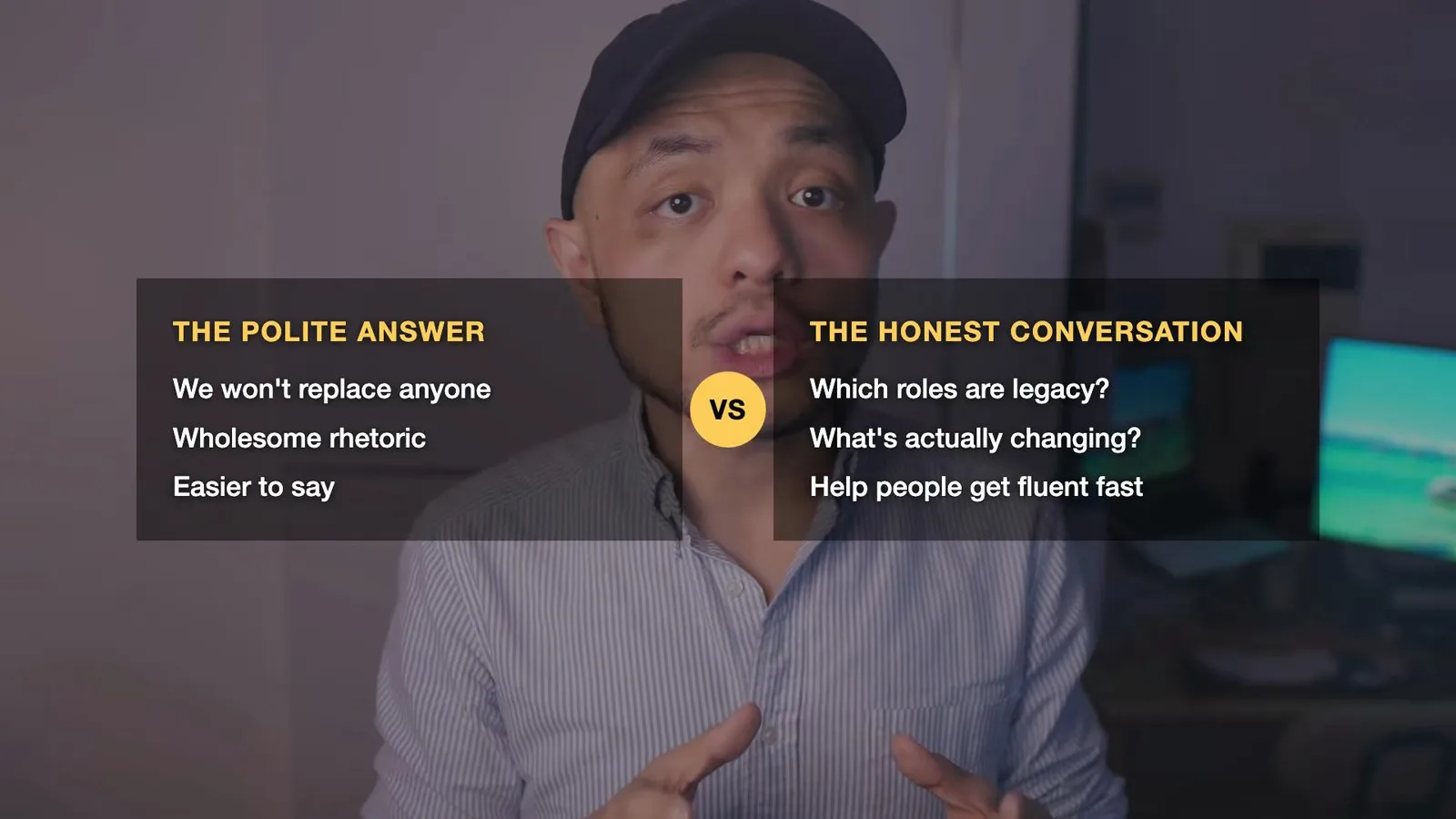
So if you lead a team, the question is whether you’re having a real conversation about which roles you’re treating as legacy, or hiding behind the reassuring version. Leading humanly means having the harder conversation. Tell people which work is changing, and help them get fluent with AI fast enough to move with it. That asks more of a leader than the polite answer does.
What does hiring and backfilling look like where you work? Tell me in the comments on the video, or find me on LinkedIn.
More videos on the leadhuman.ai YouTube channel.
Subscribe on YouTubeSources
- CIO (March 2026): Push to replace workers with AI faces backlash, even from management (Udacity's 9% figure)
- Gartner (April 2026): 31% of service and support leaders have implemented or are planning AI-driven frontline layoffs through 1Q27
- Gartner (April 2026): 85% of service and support leaders are expanding human agent responsibilities
- CNBC (February 2026): Jack Dorsey made the loudest case yet that AI is already replacing jobs
- Tom's Hardware: Tech industry lays off nearly 80,000 employees in Q1 2026, almost 50% of positions cut due to AI
- Harvard Business Review (January 2026): Companies are laying off workers because of AI's potential, not its performance
- BCG (April 2026): AI will reshape more jobs than it replaces

Jay Vergara lives in Tokyo and builds things with AI. He writes about what he learns at leadhuman.ai, makes videos about it on YouTube, and posts on LinkedIn. Most of his career has been in learning and development (L&D) and training.
You might also like

AI and Your Career: The Opportunity Inside Your Job
AI and your career, through IBM's 2026 CEO Study: the 61-point gap, the AI skills employers want now, and one workflow you can start rebuilding this week.

What Is AI Fluency? Four Skills You Can Actually Train
What is AI fluency? Four skills you can see and train: delegation, description, discernment and diligence. Most AI training stops at awareness.

AI Adoption Mostly Comes Down to Whether You've Made It Safe to Try
AI adoption isn't stalling because employees fear technology. It's stalling because manager engagement has collapsed and your team is reading the room.